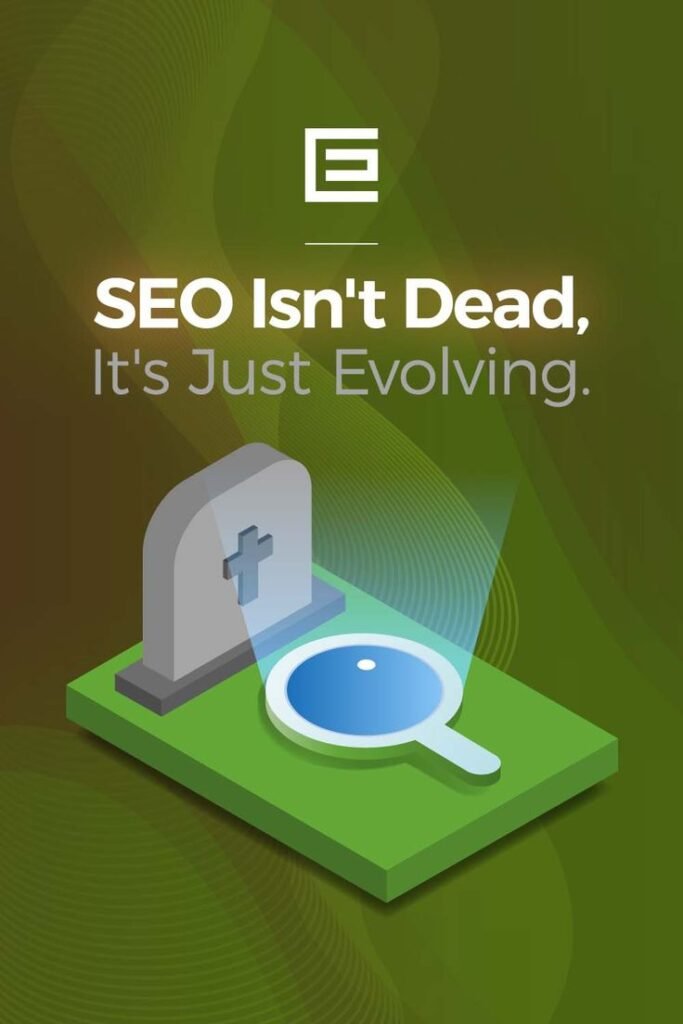
Every few years, a familiar claim resurfaces in the marketing world: “SEO is dead.” With the rise of social media, paid advertising, AI tools, and changing search algorithms, many believe that search engine optimization has lost its relevance.
But nothing could be further from the truth.
SEO is not dead—it has evolved. In fact, in today’s highly competitive digital landscape, SEO is more important than ever. The way people search, consume content, and make decisions continues to change, and SEO has adapted alongside it.
Understanding this evolution is key to staying ahead.
The Myth of SEO’s Decline
The idea that SEO is dying often comes from misunderstanding how it works.
Years ago, SEO was largely about keywords, backlinks, and technical tricks. Marketers could rank content by stuffing keywords or using low-quality link-building tactics. It was easier to manipulate the system.
Today, search engines are far more sophisticated. Algorithms now prioritize user intent, content quality, and overall experience. As a result, outdated tactics no longer work.
For some, this shift feels like SEO is fading. In reality, it’s just becoming more refined—and more valuable.
Search Is Still the First Step
Despite the rise of social media and other platforms, search engines remain one of the primary ways people find information online.
Whether someone is:
Looking for a product
Searching for a service
Trying to solve a problem
Comparing options before a purchase
They often start with a search query.
This behavior hasn’t changed. If anything, it has increased. More people are online, more questions are being asked, and more decisions are influenced by search results.
If your business isn’t visible in search, you’re missing out on a massive opportunity.
High-Intent Traffic Is Priceless
One of the biggest advantages of SEO is the quality of traffic it brings.
Unlike social media, where users are passively scrolling, search users have intent. They are actively looking for something. This makes them more likely to convert.
For example, someone searching “best laptop under ₹50,000” is much closer to making a purchase than someone casually browsing Instagram.
This high-intent traffic is incredibly valuable. It leads to better conversion rates, higher engagement, and more meaningful interactions with your brand.
SEO Builds Long-Term Assets
Unlike paid advertising, where results stop as soon as you stop spending, SEO creates lasting value.
A well-optimized blog post or webpage can:
Rank on search engines for months or even years
Continuously bring in organic traffic
Generate leads without ongoing costs
This makes SEO one of the most sustainable marketing strategies.
Think of it as building digital real estate. The more quality content you create and optimize, the stronger your online presence becomes over time.
Content and SEO Go Hand in Hand
Modern SEO is deeply connected with content marketing.
Search engines reward content that is:
Helpful and informative
Relevant to user queries
Well-structured and easy to read
Updated and accurate
This means businesses must focus on creating content that genuinely helps their audience.
It’s no longer about ranking for keywords—it’s about solving problems.
When your content answers real questions and provides value, search engines recognize it, and users trust it.
The Role of User Experience (UX)
SEO is no longer just about what’s on your page—it’s also about how users interact with it.
Search engines consider factors like:
Page load speed
Mobile responsiveness
Navigation and usability
Time spent on page
Bounce rate
If users have a poor experience, your rankings will suffer.
This shift has made SEO more holistic. It now involves design, development, and content working together to create a seamless user experience.
Voice Search and AI Are Expanding SEO
New technologies are not replacing SEO—they are expanding it.
With the rise of voice assistants and AI-powered tools, the way people search is becoming more conversational. Instead of typing short keywords, users ask full questions.
For example:
“Best restaurants near me” becomes
“What are the best family restaurants near me right now?”
This change emphasizes the importance of natural language, long-tail keywords, and structured content.
Businesses that adapt to these trends can capture even more search traffic.
Local SEO Is More Powerful Than Ever
For small businesses, local SEO is a game-changer.
When users search for services “near me,” search engines prioritize local results. This means businesses with optimized local listings, reviews, and location-based content have a significant advantage.
Local SEO helps businesses:
Attract nearby customers
Increase foot traffic
Build community trust
In a world where convenience matters, being visible locally can directly impact revenue.
Trust and Credibility Through Rankings
Ranking on the first page of search results does more than drive traffic—it builds trust.
Users tend to trust search engines. If your website appears at the top, it signals credibility and authority.
This trust factor is hard to achieve through paid ads alone. Organic rankings carry a level of authenticity that users value.
Over time, consistent visibility in search results strengthens your brand reputation.
The Cost-Effectiveness of SEO
While SEO requires time and effort, it is often more cost-effective in the long run compared to paid advertising.
Once your content ranks well, it continues to generate traffic without additional spending. This leads to a lower cost per acquisition over time.
For businesses with limited budgets, SEO offers a way to compete without constantly paying for visibility.
SEO Is Constantly Evolving
The reason many people think SEO is dead is because it keeps changing.
Algorithm updates, new technologies, and shifting user behavior mean that strategies must evolve. What worked five years ago may not work today.
But this is not a weakness—it’s a strength.
SEO rewards those who stay informed, adapt quickly, and focus on delivering value. It’s not about shortcuts; it’s about building something meaningful and sustainable.
Conclusion
SEO is not dead—it’s more alive, dynamic, and essential than ever before.
In a world where attention is fragmented and competition is intense, being discoverable through search is a powerful advantage. SEO connects you with people who are actively looking for what you offer, making it one of the most effective ways to grow your business.
Yes, it takes time. Yes, it requires effort. But the rewards—consistent traffic, higher credibility, and long-term growth—make it worth the investment.
The businesses that succeed are not the ones chasing quick hacks. They are the ones that understand the true value of SEO and commit to it for the long run.
Because as long as people keep searching, SEO will never die.